
Earlier in the year I become certified as a LEGO Serious Play facilitator. Since then I’ve been using LEGO in my development workshops with graduates. The results have been fantastic. Engaging activities, deeper insights and a lot of fun. But it goes beyond merely using LEGO as a fun team building exercise. There is a lot of science, psychology and business experience that underpins the use of LEGO in the workplace.
The Power of Play

One of my favourite quotes. As I’ve used more and more play in my sessions I’ve come to see the power of play. The power to engage those disinterested, the power to speed up learning and the power to show us who someone really is.
Several years ago I was leading a session for a group of graduates on the topic of group dynamics. We used an activity called the red/blue game. It’s a game where trust and communication is tested between people that thought they knew each other. Continue reading
The iPad and Learning: Workshops
 Back in 2007 when I started Burst I was looking around for a tool that I could use in workshops that had multimedia capabilities and that could engage 21 – 25 year olds (i.e. graduates who make up the majority of my learners). The iPod Touch fit the criteria almost perfectly. I bought a set and started using them in my workshops. They were fantastic.
Fast forward to 2010 and the iPad, with it’s bigger screen was the ideal device. I now have a set of iPads I use in all my workshops, not just with graduates.
This is how I use them… Continue reading
Unlearning
“That’s going to require unlearning what we and our learners think we know about learning.”
Nuts & Bolts: Unlearning by Jan Bozarth. I like what it means for learners, for learning professionals and for the way organisations view learning.
Learning Pace: Sprint or Marathon?
 I’ve mentioned that over the last year I’ve taken up triathlons and in the winter months I’ve looked to keep my fitness up with a half-marathon and in October a full marathon (or as a friend put it: fool marathon). Reflecting on how I’ve learnt to run again has made me realise there are a lot of parallels to corporate learning.
At the beginning I was sprinting off and trying to keep up with the fastest group. That works for about 400 metres and then you blow up and have an unpleasant rest of the race. The most important thing I’ve learned is to find your pace, whatever it is. Run your own race and set a pace that will get you to the finish line in the time you want. For longer races like half and full marathons that can mean going really slowly, but hey you get there in the end. Unlike many who go too hard early and then collapse.
So where is the parallel to corporate learning? Continue reading
Reverse Mentoring
“As more millennials join the workforce, reverse mentoring is growing as a developmental practice.”
Read a couple of articles on reverse mentoring: In Practice: Three Ways to Rev Up Reverse Mentoring & Reverse Mentoring Cracks Workplace.
I do a bit of work with graduates and would love to see more of this built into their development programs.
Listen Up
Read an interesting article on listening skills: You’re Not Listening
It reminded me of a great book I read a while ago: Crucial Conversations
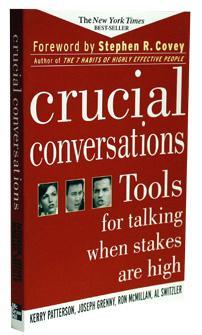 Some random insights I took out of both of these are:
- Listening starts with the building of trust / safety
- I love the idea in Crucial Conversations of filling a “Pool of Shared Meaning”
- Listening takes more time initially, but in the end saves you time.
- You have to check your ego and emotions at the door and not make it all about you. This leads you to ask more questions, leave more pauses and make more connections in the conversation.
Both article and book are worth a read / reread. Even when you think you’re good at a skill, there’s nothing like going back and doing a refresher to make sure you stay at the top of your game.
The Uncomfortableness of Learning

Two activities I’ve done over the past month have re-iterated to me how uncomfortable learning can be. We all know this, have experienced it, but I find it useful to be reminded of it. It helps to focus and improve my work.
The first activity was a swimming course I went on. Last year I took up triathlons and over this winter I decided to enrol in a “Swim Stroke Correction Course” to improve my technique. Trying to unlearn my swimming style and replace it with new and seemingly bizarre ways to do things was quite confronting. Particularly when you’re taking big gulps of pool water as your body tries to respond.
Karaoke Rule

Not all innovation is about fancy technology or new ways of learning, sometimes it’s just about approaching a problem in a different way.
Learners were arriving late back from the break in some workshops I was running. Common enough problem. Instead of playing the boring “let’s try and get back from the break on time” teacher card, I adopted the Karaoke rule.
Whenever someone is late back from a break get them up to sing part of their favourite song to the whole group. Sometimes you get singers, sometimes not, but you always get people coming back on time. It also creates a bit of fun and even a buzz around training and learning. The word got around the company that people were being made to sing in workshops!
Problem solved + some added benefits.
Any weird and wacky ideas that you’ve used to great effect?
70:20:10
“Why do learning departments and CLOs spend so much time and resources on the 10 percent when there is plenty to do for the other 90 percent? It’s a legacy from an earlier time.”
I’ve been thinking, talking and reading a lot about 70:20:10 over the last year, so I thought it was worth pointing to a couple of interesting articles on it.
The Other 90 Percent of Learning
70:20:10 Buzzword or Effective Learning Approach?
For me there are two main benefit from an idea like 70:20:10
(1) it makes learning professionals reassess where they are spending their time and
(2) it’s a great conversation starter with learners, getting them to realise where most of the learning occurs.
 Burst Development